THE WEALTH OF A COUNTRY
THE WEALTH OF A COUNTRY
/* This sculpture and musical composition are the creative portion of a larger personal research project on the history of stone walls, masonry, and manual labor as employment in both Famine-era Ireland and pre-colonial to present-day New England. */
The Wealth of a Country was completed with funding and mentorship through the 2O25 - 2O26 CCAM Studio Fellowship at Yale University.
The sculpture and music are on exhibit at 149 York St, New Haven, CT through April 24, 2O26.
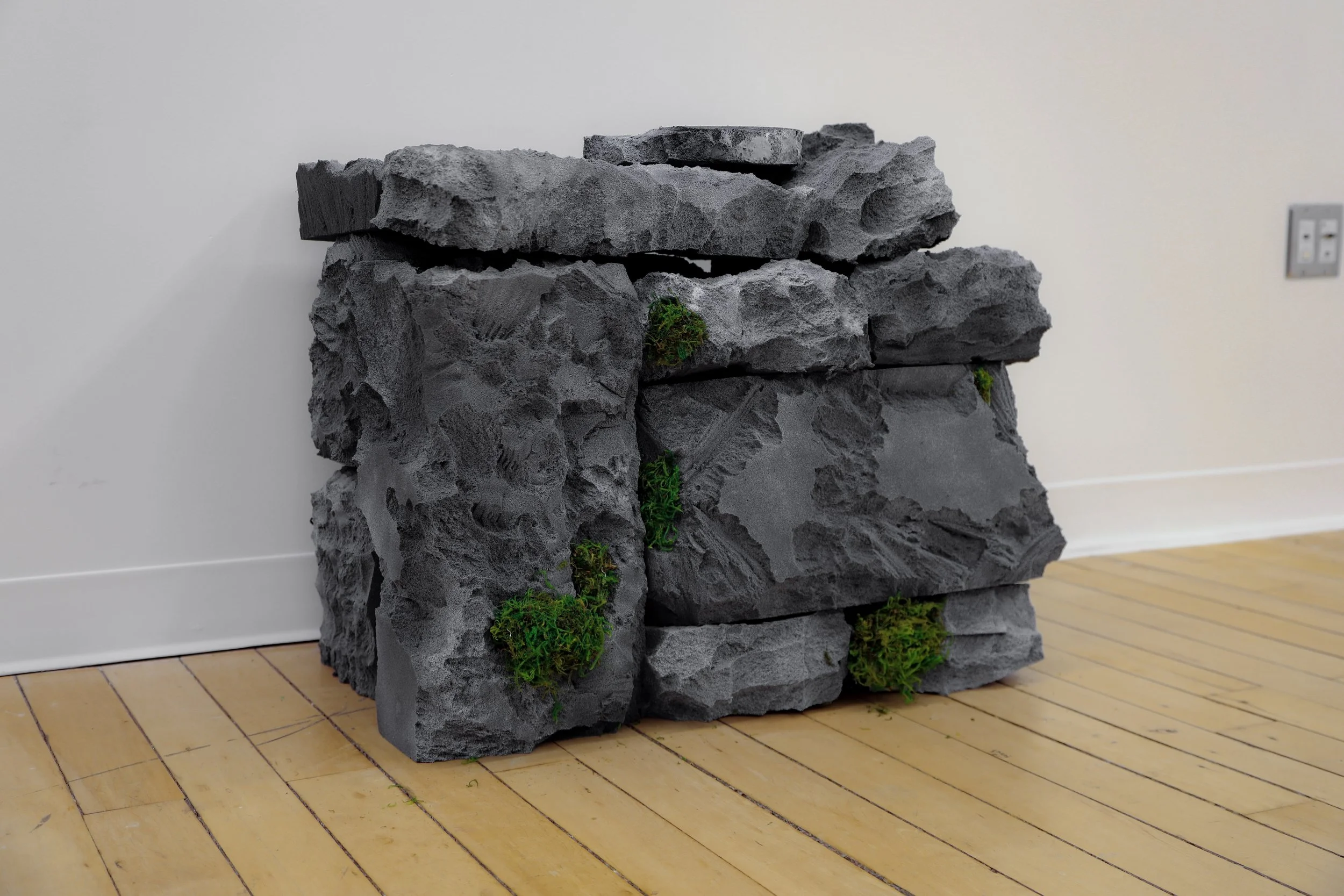
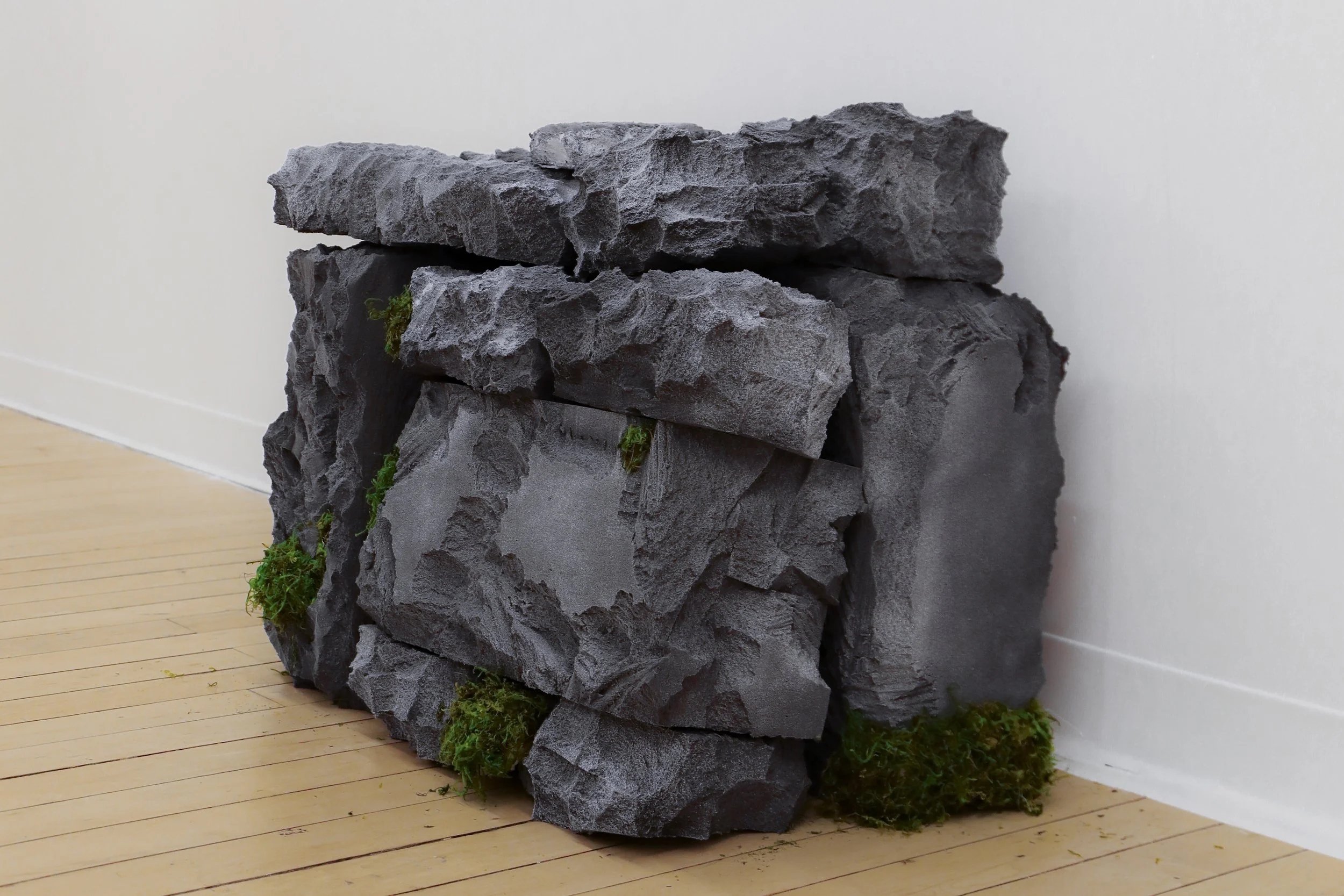
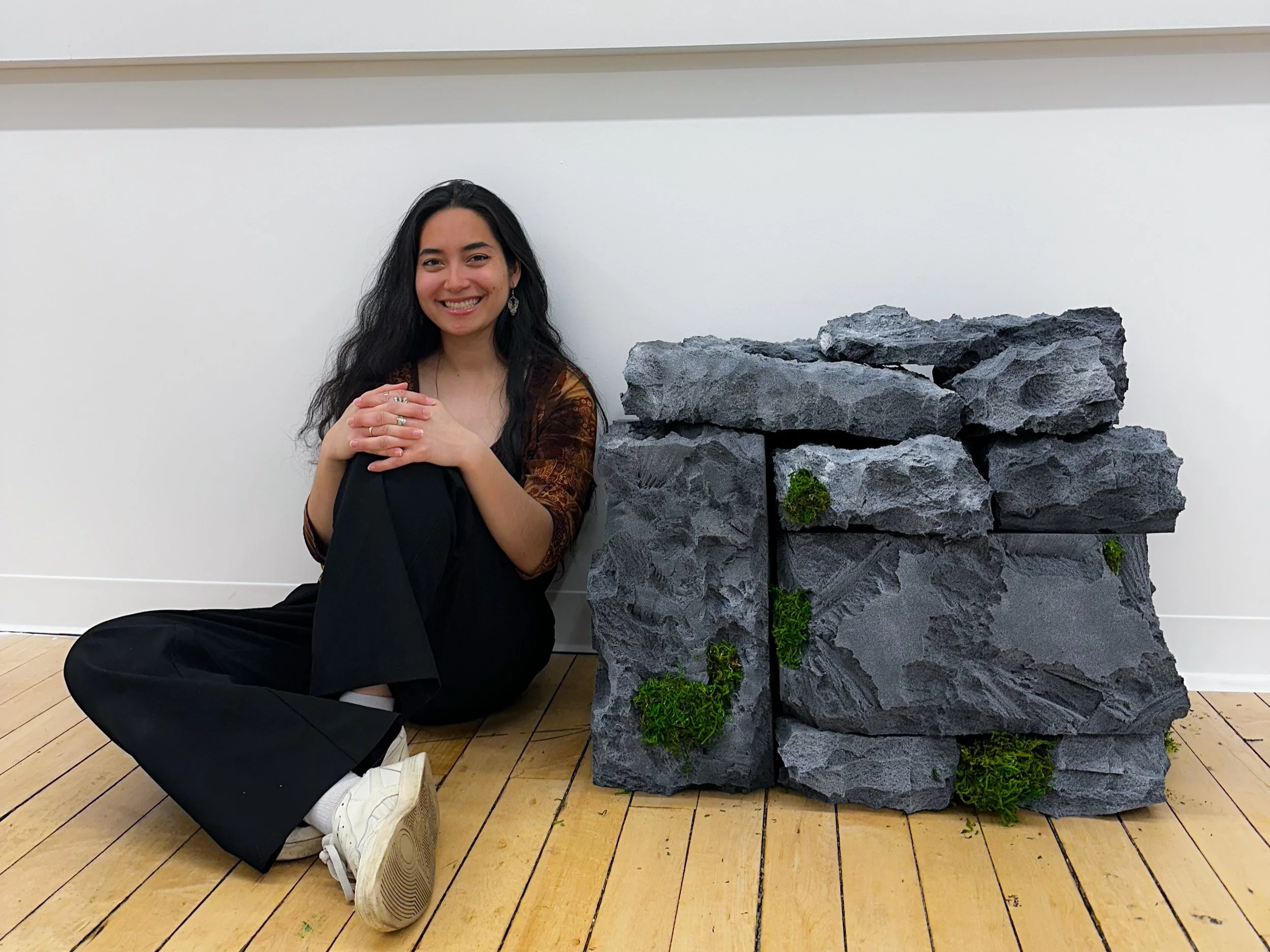
The Wealth of a Country
Upholstery foam, four speakers, media players, rubber spray coating, spray paint, dried Spanish moss
42” x 24” x 3O”
Audio:
The Mason for solo instrument and computer (2O26)
BACKGROUND
I grew up in Torrington, Connecticut, where my dad was the town mason for years of my childhood. Standing halfway underground in catch basins, he’d use brick, stones, mortar, and his own hands to keep the streets of my hometown safe and functional. I can drive around my hometown and point to all the catch basins he constructed and all the streets he plowed in the winter——only because he also points them out every time we drive by.
My dad built the stone walls in my backyard my brother and I used to climb and play on. He taught me to notice the abandoned stone walls in forests we’d pass on drives, and to consider a place’s ecology as part of its history.
It was this instilled appreciation that led me to look into the history of the stone walls I’d been passing in the western countryside of Ireland during a solo trip in 2O25.
This work is dedicated to my dad and in appreciation of my mom, grandmother, and anyone else who’s worked a job involving manual labor to support their family.
THE RESEARCH
In medieval times, stonemasonry in Ireland was a highly respected trade, requiring legitimate birth, an education in Latin, and years as an apprentice and journeyman. During the Great Famine, however, stonework became a symbol of the unemployed and starving. In my research, I’m asking the following questions:
Why and since when is there a distinction between the “trades” and the “arts?” Is it related to forced labor and class?
What are the ecological impacts of stone walls?
What are the longterm impacts of famine on a nation after hundreds of years have passed?
Ireland
The “Famine Walls” or “Penny Walls” of Ireland were built during the Great Famine of 1845-1852. As part of public relief work programs, unemployed peasants were hired by landlords and churches to build stone walls for pennies a day. While many walls marked property lines or cleared land, many served no purpose other than busy work, as those with money refused to participate in what they felt were handouts. The walls still stand today across even the most remote parts of Ireland.
New England
In 1872, New England contained an estimated 25O,OOO miles of stone walls, more than twice the length of the present total U.S. shoreline. While most were built by landowners and their families, some were built by enslaved or incarcerated people and landless Indigenous people hired for minimal compensation. At first disregarded as an unsightly nuisance, stone walls became a symbol of New England in paintings and literature over time. A famous early example is the poem “Mending Wall” by Robert Frost, inspired by his property’s stone walls in Derry, New Hampshire and published in the first year of World War I:
There where it is we do not need the wall:
He is all pine and I am apple orchard.
My apple trees will never get across
And eat the cones under his pines, I tell him.
He only says, ‘Good fences make good neighbors.’
THE MUSIC
The Mason (2O26)
for solo instrument and computer
around 3O minutes
I aimed to recreate the building of a stone wall by composing as if musical materials were physical building blocks. Looping tracks should stack unaligned to resemble a stone wall within the DAW project file.
The version used for this installation is me improvising live on piano and computer. I exported four different tracks out into the speakers to create a multi-channel, spacialized effect within the sculpture. Full version below:
INSTRUCTIONS FOR PERFORMANCE
Requires a computer with a DAW. Loops to be added live without stopping the piece.
Begin by choosing a framework such as a key (pitched instruments) or time signature (unpitched).
Loop a simple foundational motif or rhythm. Repeat it, in time, out of time, or both. Loop.
Gradually add in more looped layers, or “details,” within and sometimes outside the set framework.
Looped tracks should rarely line up or be the same length. The project should resemble a stone wall.
To conclude the piece, gradually remove all foundational tracks until the piece is reduced to the details. Then gradually remove the detail tracks.
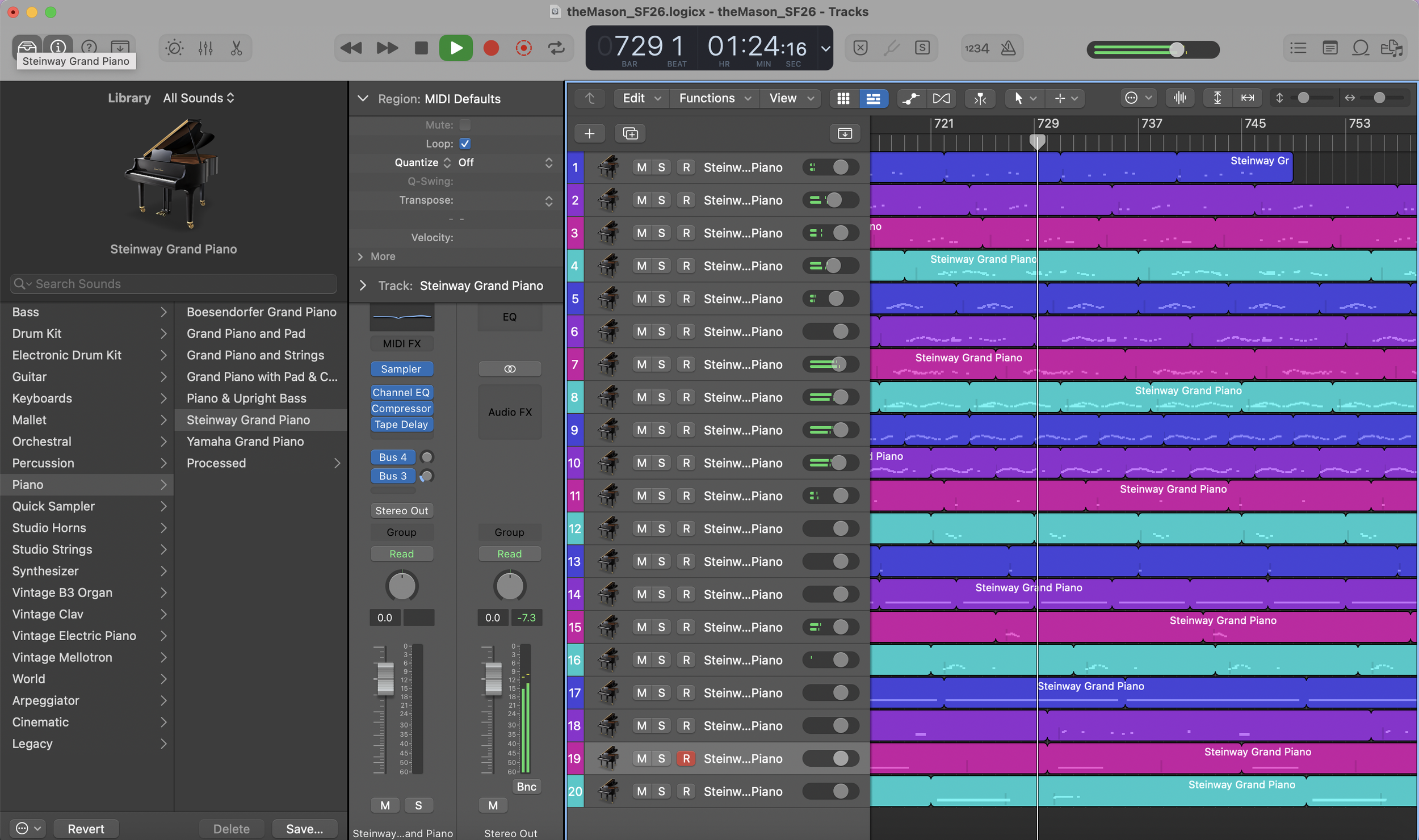
// final Logic Pro project file for The Mason. Color coded by speaker
THE SCULPTURE
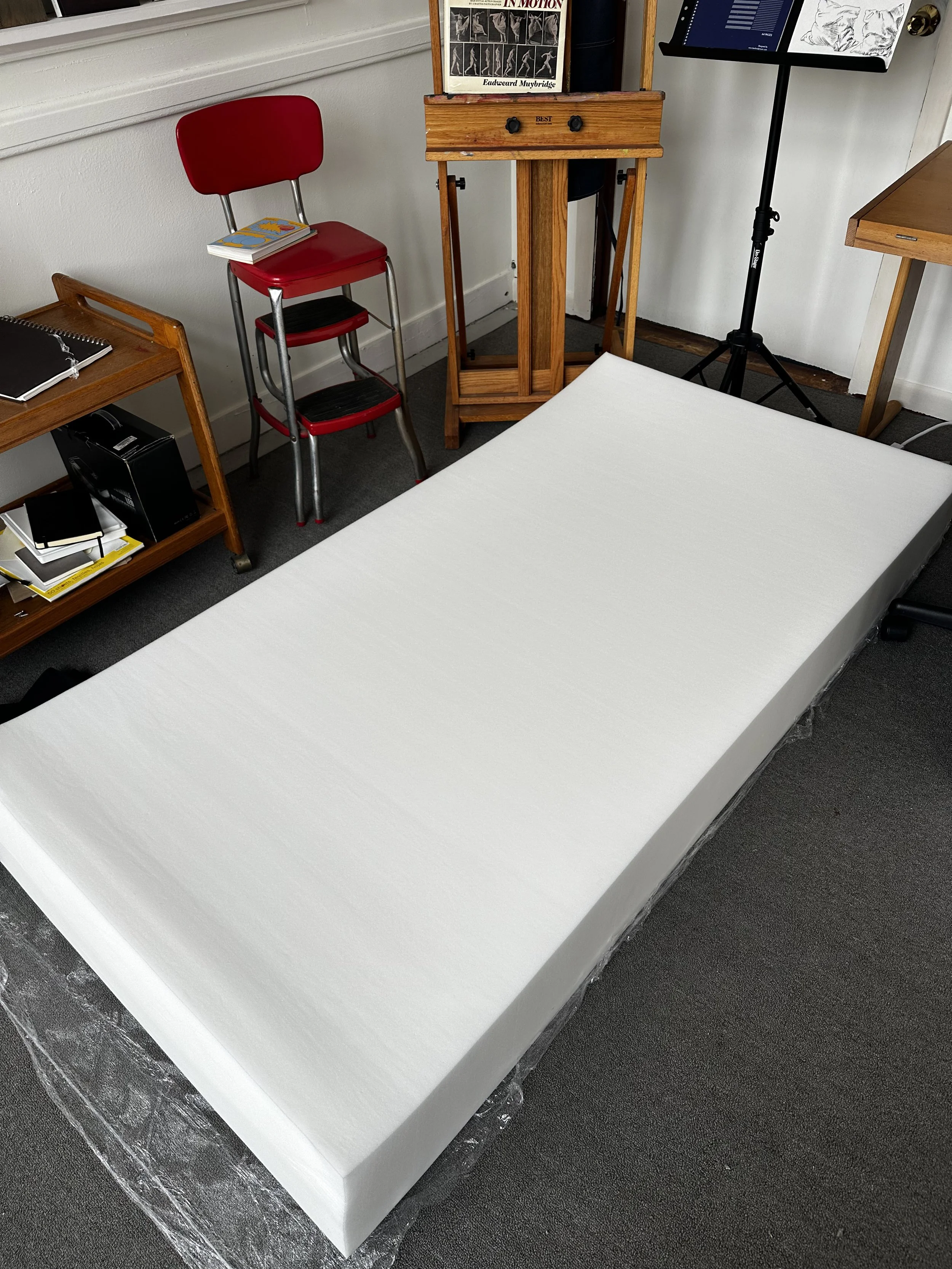
// 6’ roll of 8” upholstery foam in my studio
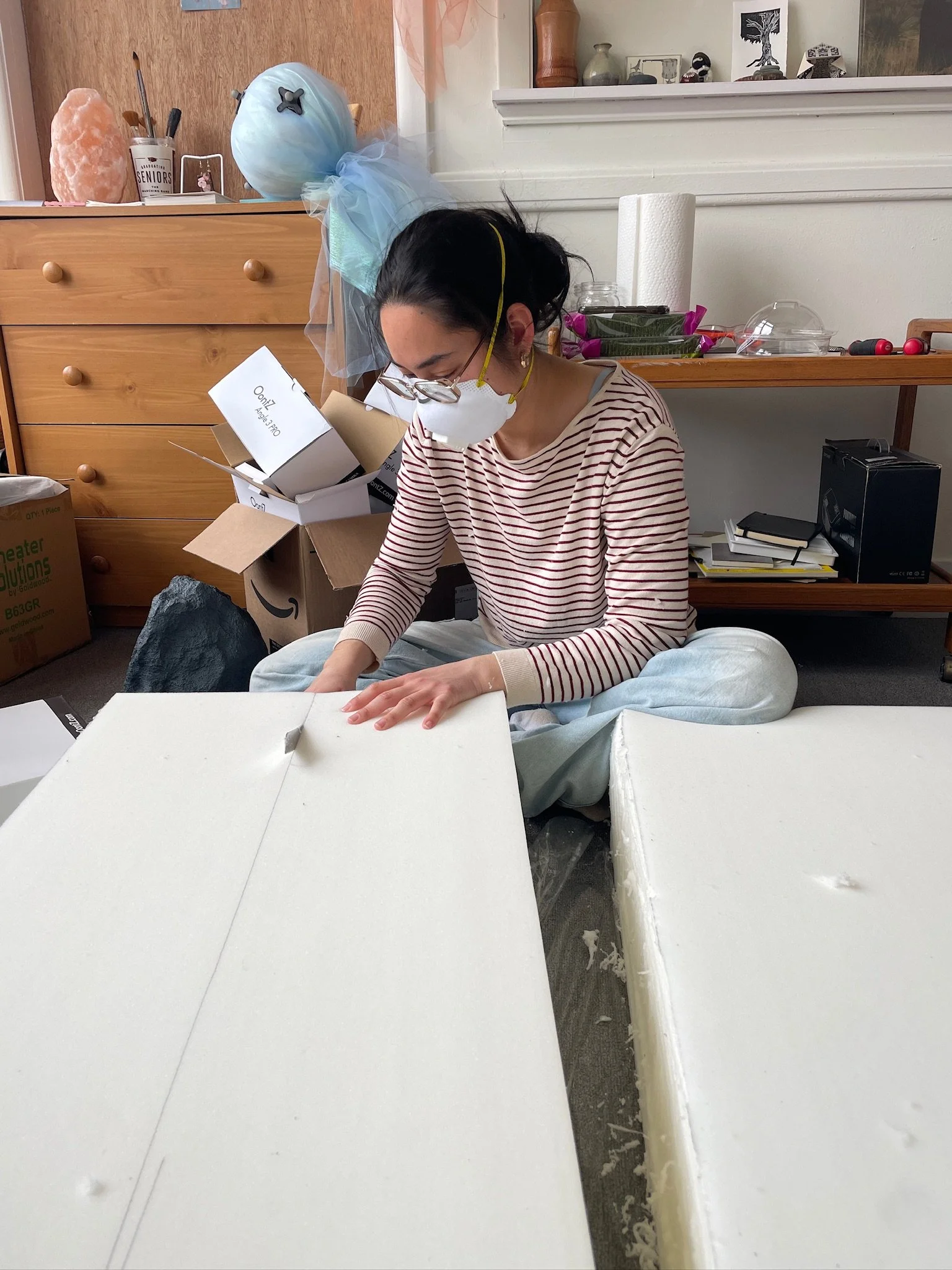
/* Using a bread knife to cut up foam into smaller blocks,
then ripping up surfaces by hand */
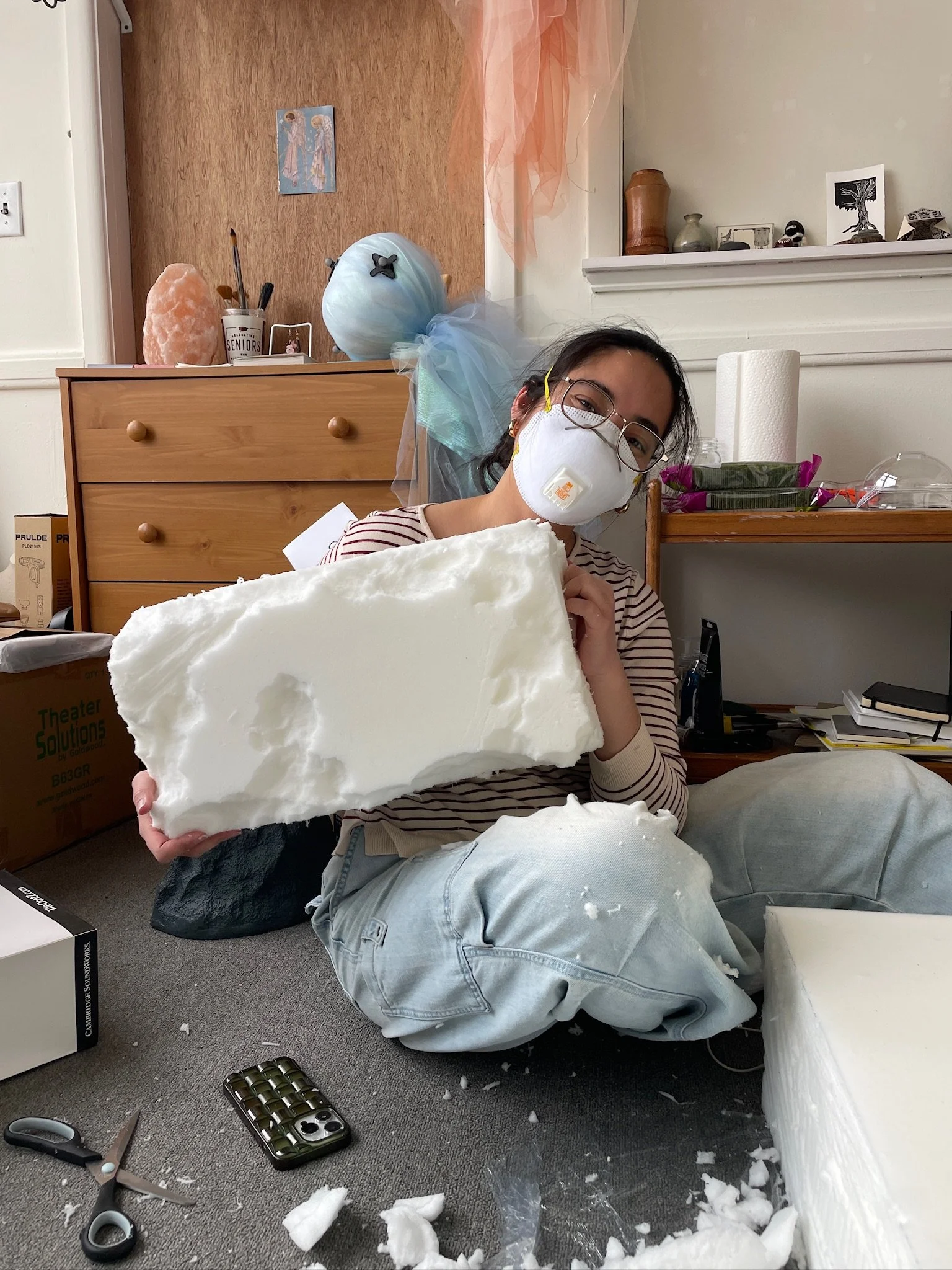
// The first stone!
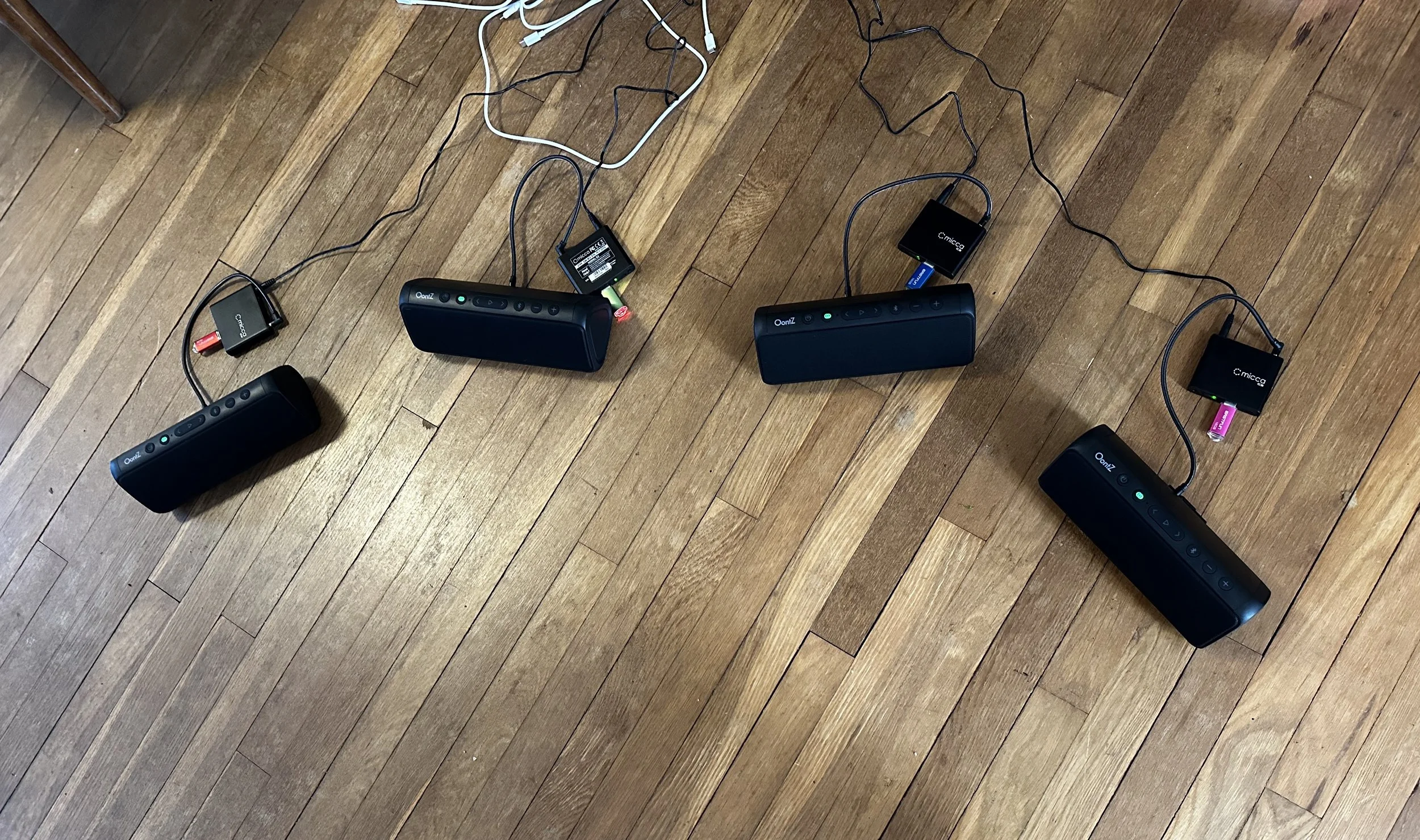
// Speakers and media players hidden inside larger stones
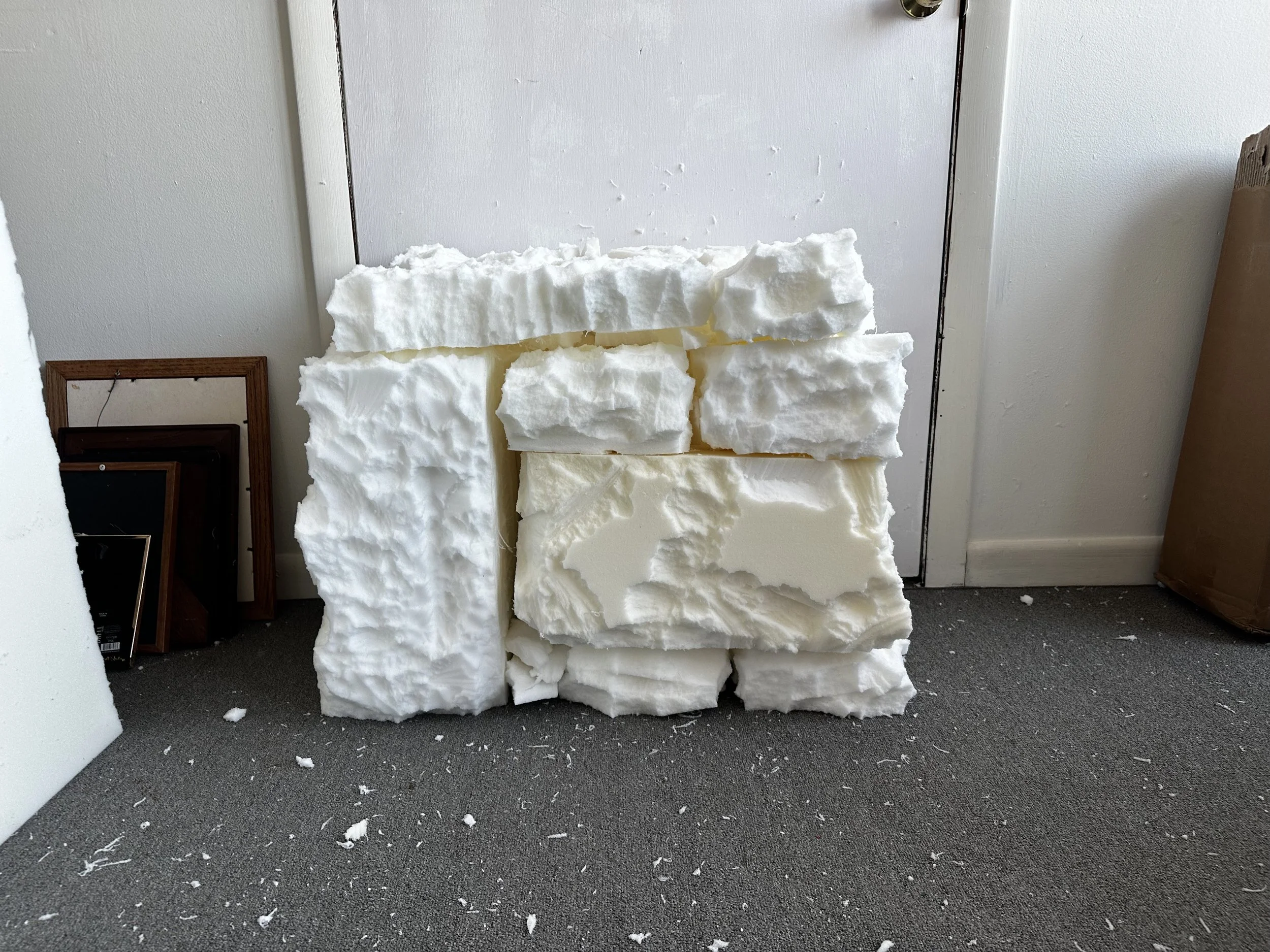
// Stone wall prior to rubber coating, gray + white spray paint, and moss
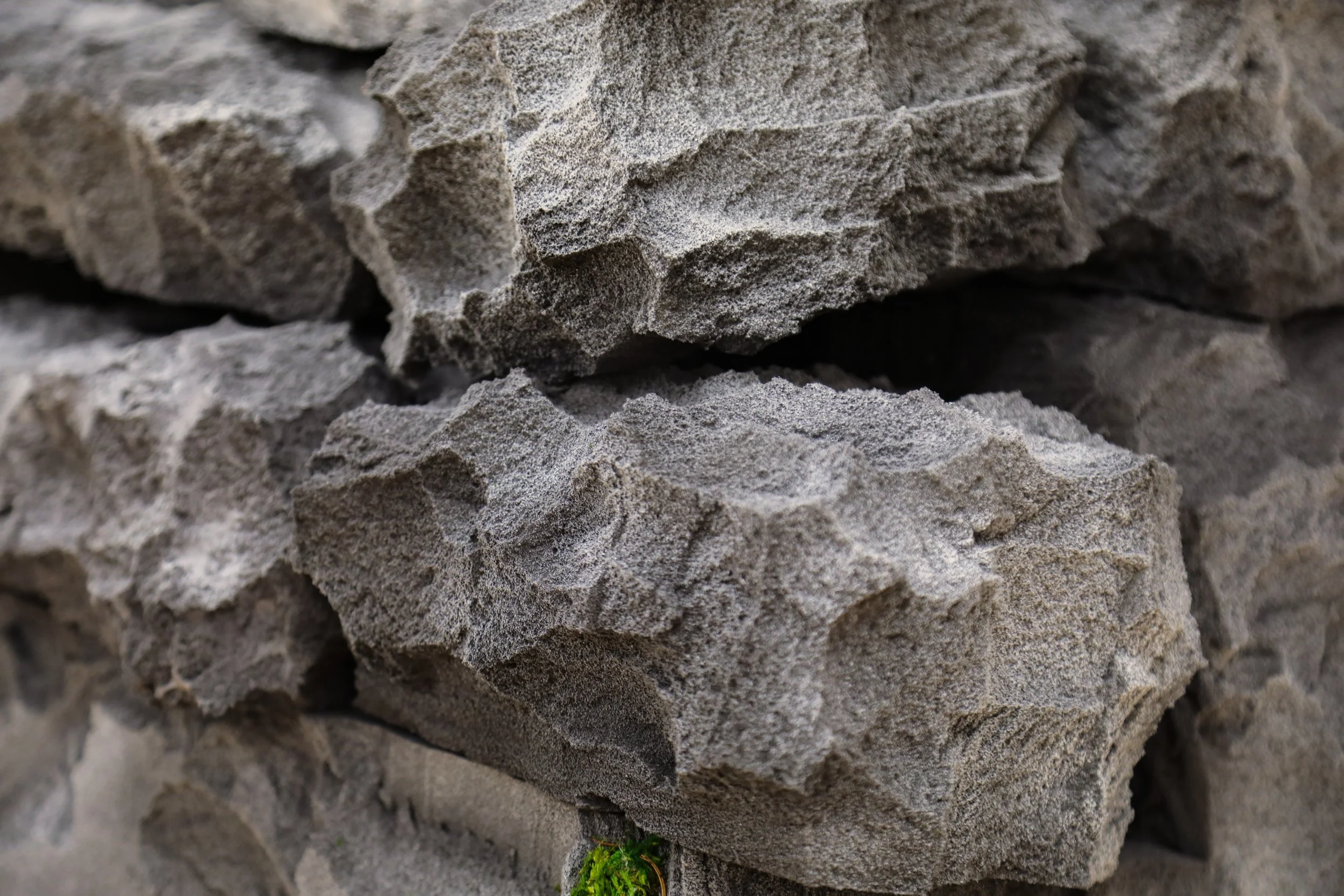
// Final sculpture up close
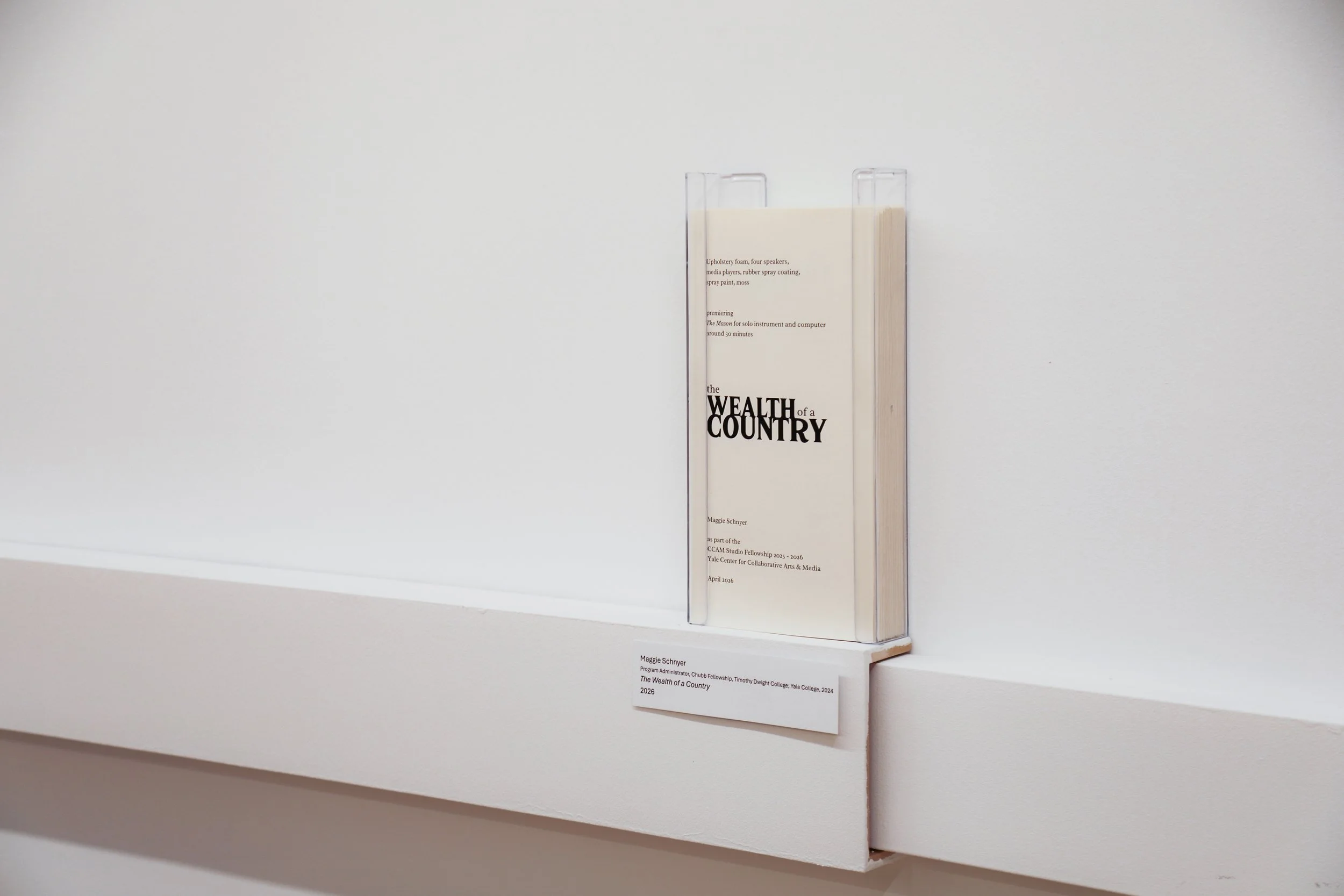
// Informational brochures stationed next to sculpture
“Art grows out of good work by men who enjoy it. It is the wealth, surely, of any country.”
SEAMUS MURPHY
Irish stone-cutter and sculptor
19O7 - 1975
SPECIAL THANKS
My Advisor
Ross Wightman
Yale CCAM
Doctor Lauren Dubowski
Doctor Dana Karwas
Doctor Matthew Suttor
Christina Young
my mom and Nanay
& my dad, the Mason
FURTHER READING
Stone Mad by Seamus Murphy
Stone by Stone: The Magnificent History in New England’s Stone Walls by Robert Thorson
Stone Upon Stone: The Use of Stone in Irish Building by Nick Ryan
Talking Walls by Matt Bua